
Views: 0 Author: Site Editor Publish Time: 2026-04-29 Origin: Site

CNC machining uses computers to control machines that shape materials. These machines make parts that are very exact. HoudeMold is a leader in CNC services for making things. You get very accurate parts, fast samples, and quick production.
There are fewer mistakes, so you waste less and save money.
Machines can work with little watching, so your team does more.
CNC lets you make hard shapes and meet strict rules.
CNC machining is important because industries want good quality and fast work for every project.
CNC machining uses computers to run machines. This helps make parts very precise and repeatable.
This way cuts down on waste and errors. It saves money for companies.
CNC machines can work all the time. This means parts are made faster. It also uses time better.
CNC machining lets you make hard shapes and designs. It works for many different industries.
HoudeMold gives fast prototyping and flexible production. They make sure every project is high quality.
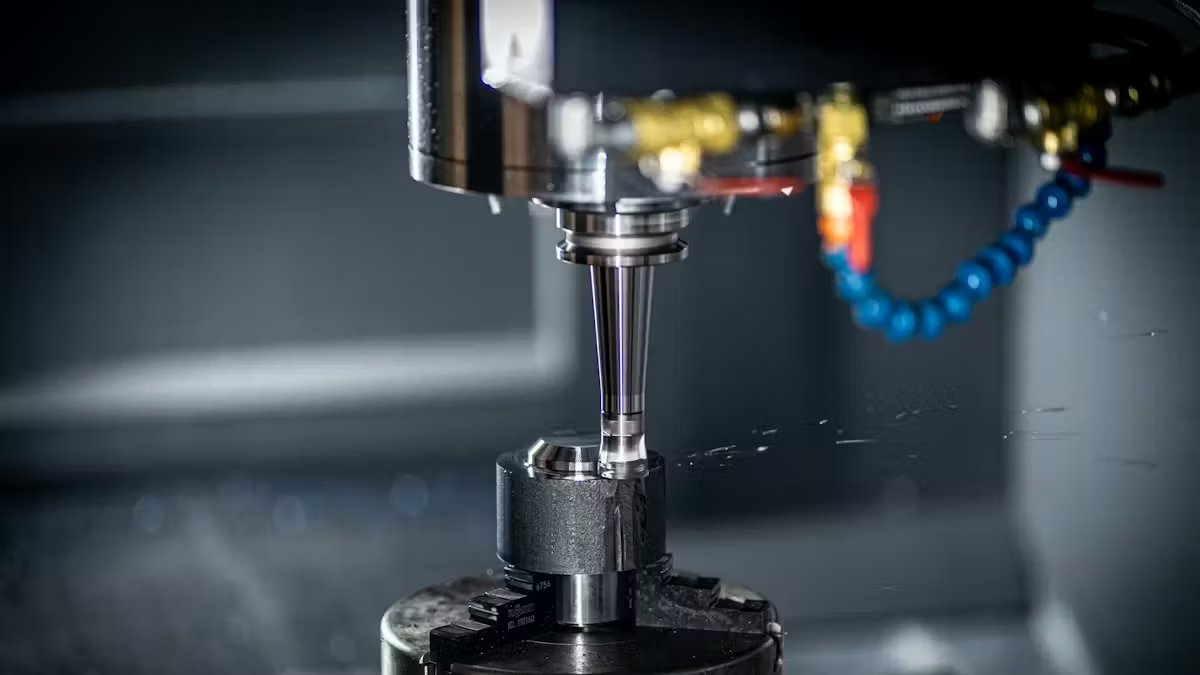
CNC machining means Computer Numerical Control machining. Computers help control machines that shape things like metal, plastic, or wood. The computer sends instructions to the machine. These instructions tell the machine how to move and what to cut. The machine removes material from a block to make the final part. This is called a subtractive method.
CNC machining is different from other ways. For example, 3D printing adds layers, but CNC takes material away. CNC machining is good for making strong and exact parts. You do not need to watch the machine all the time. The computer does most of the work. You get the same result every time.
HoudeMold uses advanced CNC technology. You get parts that meet strict standards. The machines follow instructions with great accuracy. Many industries trust CNC machining for important projects.
CNC machining gives you many benefits in manufacturing. You can see these benefits in how the machines work and the results you get.
When you use CNC, you get high precision and repeatability. The machines can make parts with tolerances as tight as ±0.01mm. This accuracy is hard to match with manual methods.
Here is a table that shows how CNC machining compares to manual machining:
Factor | CNC Machining | Manual Machining |
|---|---|---|
Control Method | Computer-programmed control (G-code) | Manual operation by skilled machinists |
Precision & Tolerance | Very high precision, repeatability up to ±0.01mm or better | Precision depends heavily on operator skill |
Consistency | Excellent consistency across batches | Variations common between parts |
Production Speed | High speed, supports 24/7 automated operation | Slower, limited by human fatigue |
Complex Geometry | Easily handles complex and multi-axis geometries | Difficult and time-consuming for complex shapes |
Labor Dependence | Lower direct labor involvement | High reliance on skilled manual labor |
Scalability | Ideal for prototypes to mass production | Better suited for small batches or repairs |
You can see that CNC machining has many strengths:
Precision and accuracy: Parts fit exactly as needed.
Consistency: Every part looks and works the same.
Efficiency: Machines can run all day and night.
Complex shapes: CNC can make parts with detailed designs.
Less waste: The machine cuts only what you need.
Flexibility: You can order one part or thousands.
HoudeMold lets you make one prototype or a large batch. You do not have to worry about minimum order sizes. The team uses CNC to help you go from design to finished product quickly. CNC machining is important today. You get reliable, fast, and high-quality results for any project.
When you look at a cnc machine, you see many important parts working together. Each part has a special job. Here are the main components you will find in most cnc machines:
Controller: This is the brain of the cnc machine. It reads the instructions and tells the other parts what to do.
Drive System: This system moves the machine’s parts. It uses motors to make sure everything goes to the right place.
Feedback System: This part checks the position of the machine. It helps keep the cnc machining process accurate.
Spindle: The spindle holds the cutting tool. It spins the tool at high speeds to cut the material.
Bed or Worktable: This is where you place the material. The bed keeps the workpiece steady during machining.
Input Device: You use this to send the program into the machine.
Coolant System: This system keeps the cutting area cool and clean.
Each part works together to make sure the cnc machining process runs smoothly. When you use advanced controllers, you get high precision and better results. The table below shows how these controllers help your work:
Benefit | Description |
|---|---|
High Precision And Accuracy | Cnc machines can reach tolerances as tight as 0.0001 inches. This is important for exact work. |
Consistent Product Quality | Every part comes out the same, with smooth surfaces and no big changes between parts. |
Increased Production Efficiency | The machine works fast and can change tools by itself, so you get more parts in less time. |
The cnc machining process follows clear steps from your idea to the finished part. You start with a design and end with a product that meets your needs. Here is a simple table that shows each stage:
Stage | Description |
|---|---|
1 | Design & Programming: You create a CAD model and turn it into G-code. |
2 | Machine Setup & Workpiece Loading: You load the tools and secure the material on the bed. |
3 | Machining: The cnc machine cuts, mills, or turns the material into shape. |
4 | Finishing, Inspection & Post-Processing: You add final touches and check the quality. |
You use the cnc machining process to make sure every part matches your design. The process starts with a digital model. You use software to create this model. Then, you convert the model into instructions the cnc machine can understand. You load the material onto the bed and set up the tools. The machine follows the program and shapes the material. After machining, you check the part for quality and finish it as needed.
Cnc machining gives you repeatability and consistency. Here is how it works:
You use computer programs to control the machine tools.
The programs tell the machine where to move and what to do.
By following these steps, the cnc machine keeps tolerances tight, often around ±0.01mm.
You get high precision and the same results every time. This is why industries trust the cnc machining process for important projects. HoudeMold uses advanced technology and strict quality checks to make sure you get the best results.
G-code is the language that tells the cnc machine what to do. You use G-code to give the machine step-by-step instructions. These instructions control the movement, speed, and actions of the tool. G-code comes from your CAD design. Special software turns your design into G-code, so the cnc machine knows exactly how to shape the material.
When you use G-code, you make the cnc machining process automatic. The machine follows every command with high precision. This means you get parts that match your design, even if you make many copies. G-code lets you control every detail, from how fast the tool moves to how deep it cuts.
Programming a cnc machine takes skill. You need to use the right codes and set the correct paths. You also need to know about feeds, speeds, and the best way to cut each material. If you make a mistake in the program, it can cause problems. That is why HoudeMold uses expert engineers and advanced software. They make sure every program is correct before starting the cnc machining process.
The importance of cnc machining comes from its ability to make complex parts with high precision. You can trust the process to deliver the same quality every time. HoudeMold’s team checks every step, from programming to final inspection, so you get reliable and accurate parts for your project.
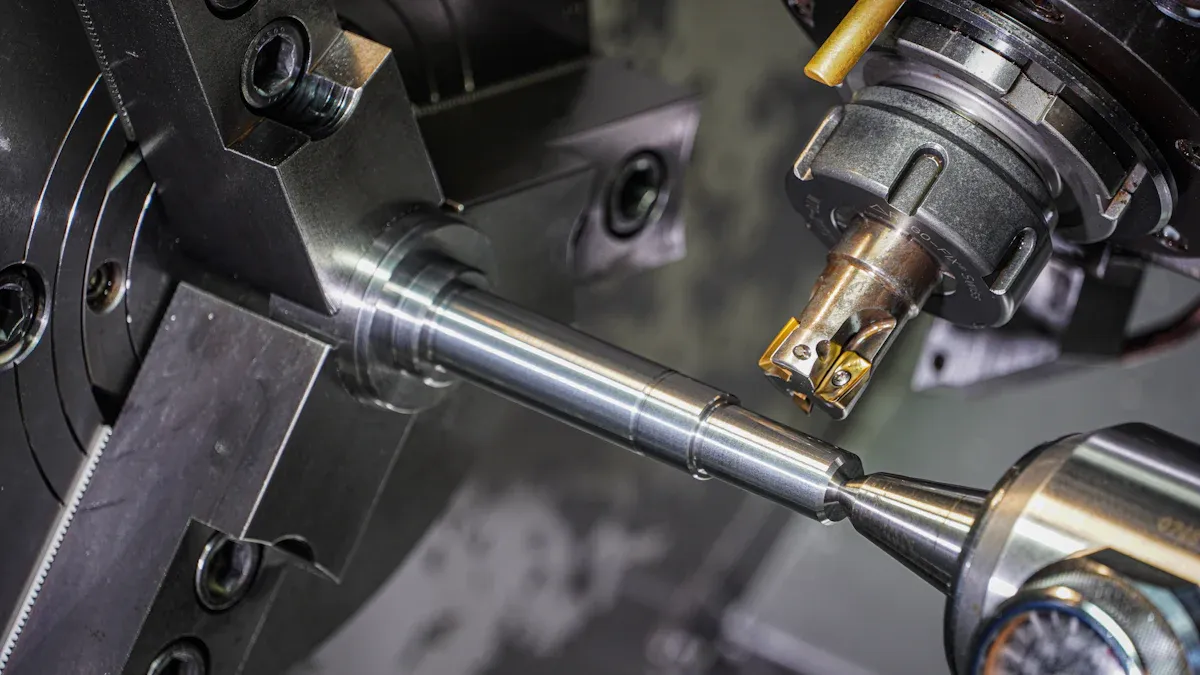
There are many cnc machines used today. Each machine does a special job. Some machines are better for certain tasks. Here are some common cnc machine types:
CNC Mills: These machines make complex shapes. You can use them in many fields.
CNC Lathes: These machines spin the part. They make round parts like shafts or bolts.
CNC Plasma Cutters: These machines cut metal fast with hot plasma. They are good for making things in shops.
CNC Routers: These machines shape wood, plastic, and soft metals. People use them for signs and woodworking.
CNC Lasers: These machines cut or engrave with laser beams. They give very exact results.
CNC Wire EDM: These machines cut shapes with thin wires. Tool makers use them for high accuracy.
CNC Waterjet Cutters: These machines cut materials with strong water jets. They are used in aerospace and building projects.
You pick the cnc machine based on your material and shape.
CNC machining uses different ways to shape parts. Each process removes material in its own way. The table below shows main cnc machining processes and how they work:
CNC Machining Process | Description of Material Removal |
|---|---|
CNC Milling | Cutting tools spin and move to take away material. |
CNC Turning | The part spins while a tool shapes it. |
CNC Drilling | A drill bit goes down to make holes. |
CNC Grinding | A spinning wheel smooths rough spots. |
CNC Routing | The tool moves in three directions while the part stays still. |
You can use these processes for simple or hard shapes. Multi-axis cnc machines help make deep pockets and special features. You can make things like turbine blades or medical parts with high precision. HoudeMold uses advanced cnc machines and skilled workers. You get parts with tight tolerances and complex shapes, even with tough materials.
Tip: If you need parts with special shapes or strict quality, cnc machining lets you design and make what you want.
You can pick from many metals for cnc machining. Each metal has its own special features. Some metals are better for certain jobs. The table below shows common metals, their main qualities, and where you use them:
Metal | Key Characteristics | Common Applications |
|---|---|---|
Aluminium | Lightweight, easy to machine, strong for its weight, resists rust | Car parts, airplane parts, electronics cases, brackets and frames |
Steel | Very strong, wears well, good for making lots of parts | Shafts, gears, fixtures, machine parts, car parts |
Stainless Steel | Resists rust, strong, handles heat well | Medical tools, food machines, chemical and boat parts |
Titanium | Very strong but light, handles heat, resists rust | Airplane parts, medical implants, defense and racing parts |
Cast Iron | Handles heavy loads, wears well, absorbs vibrations, easy to machine | Machine bases, engine blocks, brakes, gear cases, pump bodies, big frames |
When you choose a metal, think about how hard it is. Also think about how strong it is and how easy it is to shape. Hard metals can wear out tools fast. Softer metals may need slower speeds or special care to stop rough edges.
Aluminum is popular because it is strong, light, and easy to machine. You see it used in many cnc projects because it works well for lots of things.
Cnc machining can also use many plastics. Plastics are good for parts that need to be light or resist chemicals. They are also good for special shapes. Here is a table with some plastics and what they are good for:
Plastic Type | Key Characteristics | Typical Applications |
|---|---|---|
ABS | Easy to machine, tough, not expensive | Product cases, car interiors, test models |
Nylon (PA) | Slippery, strong, resists chemicals | Gears, bushings, bearings, wear parts |
PEEK | Handles heat, very strong, resists chemicals and wear | Airplane and medical parts, oil and gas parts, electrical insulators |
Delrin (POM) | Slippery, stiff, smooth finish | Precise parts, sliding parts, gears and cams |
You can also use composite materials in cnc machining. These materials can be harder to machine and may cost more. But they give special benefits for some jobs.
When you compare plastics and metals, metals are usually easier to machine with standard cnc tools. Plastics may need special settings or tools. But plastics can make lighter parts and have unique features.
You can pick the best material for your cnc project by thinking about how the part will be used. Also think about how strong it needs to be and what kind of finish you want.
CNC machining is used in many industries. It helps make parts that need to be very accurate. It also helps make parts quickly. The table below shows how different industries use CNC machining:
Industry | Application |
|---|---|
Automotive | Special parts for old cars and fancy models. |
Aerospace | Exact parts for planes and space vehicles. |
Healthcare | Custom medical tools and test parts for patients. |
In aerospace, CNC machining makes things like turbine blades and engine parts. It also makes brackets. These parts must be very exact for safety. In medicine, CNC machining makes tools for surgery, implants, and dental parts. It uses strong materials like titanium and stainless steel. These materials are safe and last a long time. You must follow strict rules for quality and repeatability.
You can compare CNC machining to older ways and 3D printing. CNC machines work all day and night. This means you get more parts faster. Tool changers help speed up the work. You can see up to 80% more efficiency when you use CNC instead of manual methods. CNC machines cut materials quickly. This helps you finish jobs on time.
3D printing makes complex shapes easily. But CNC machining gives you better accuracy and is faster for big orders. The table below shows the main differences:
Feature | CNC Machining | 3D Printing |
|---|---|---|
Speed | Fast for big jobs | Slow for big jobs |
Cost | Cheaper for many parts | Cheaper for one part |
Precision | Very high | Not as high as CNC |
Flexibility | Limited by tools | Makes tricky shapes easily |
CNC machining is good for making prototypes that are just like the final products. This helps you test your designs and make sure they work.
HoudeMold gives you fast prototyping and flexible production. You get quick results and mold tests right after you order. The team starts production fast and keeps your delivery on schedule. HoudeMold checks quality with careful inspections and SPC reports. You get parts that meet high standards. Most batches pass at a rate of about 99.98%. You can count on HoudeMold for reliable CNC machining, quick turnaround, and steady quality.
CNC machining helps you make parts that are very exact. It saves money because there is less waste and fewer mistakes. You can use CNC machining for many different projects. The table below shows the main reasons why CNC machining is a good choice:
Key Takeaway | Description |
|---|---|
Precision | You get parts that are always the same. |
Cost-effectiveness | You spend less because you waste less material. |
Versatility | You can use many materials and make hard shapes. |
Sustainability | You use resources carefully and help the environment. |
You can count on HoudeMold for quick help and good results. CNC machining is a smart way to turn your ideas into real things and do well in making products.
CNC stands for Computer Numerical Control. You use a computer to control machines that cut and shape materials. This helps you make parts that are very exact.
You can get CNC machined parts quickly. HoudeMold offers rapid prototyping. You often receive your first samples in just a few days.
You can use many materials, such as:
Metals (aluminum, steel, titanium)
Plastics (ABS, nylon, PEEK)
Composites
Tip: Choose your material based on strength, weight, and how you will use the part.
You should choose CNC machining when you need:
CNC Machining | 3D Printing |
|---|---|
High precision | Complex shapes |
Strong parts | Fast design changes |
Many parts | Small batches |
CNC machining gives you better accuracy and strong parts.
Yes, you can order just one part or many. HoudeMold supports both small and large orders. You do not need to worry about minimum quantities.