
Views: 0 Author: Site Editor Publish Time: 2026-06-10 Origin: Site

You use rapid prototyping to make your ideas real fast. This process helps you build models from digital designs in just a few days. Rapid prototyping machining processes, like CNC machining, 3D printing, injection molding, sheet metal fabrication, and casting, help you test and fix your designs quickly. These methods let you find problems early and lower risks before you start making lots of products. The table below shows how rapid prototyping makes product development faster than old methods:
Benefit | Description |
|---|---|
Faster Design Iteration | Rapid prototyping lets you make many changes in a short time, so you can improve your design faster. |
Cost-Effective Development | Finding design problems early stops expensive changes later in production. |
Early Functional Testing | Physical prototypes let you test fit, movement, strength, and assembly before making the product. |
Reduced Product Development Risk | Each new prototype helps you know more, so there are fewer surprises when you start production. |
Development Cycle Reduction | Companies using rapid prototyping can make their development time up to 30% shorter. |
You can control your prototyping by picking the right process for your needs.
Rapid prototyping helps make products faster. It lets you test and change designs quickly.
Picking the right prototyping method saves time and money. You should think about what your project needs.
Getting feedback early from prototypes finds problems before making many products. This lowers risks and costs.
Methods like 3D printing and CNC machining have special benefits. Choose the one that fits your needs best.
Rapid prototyping helps teams talk better. This makes teamwork stronger and the product better.
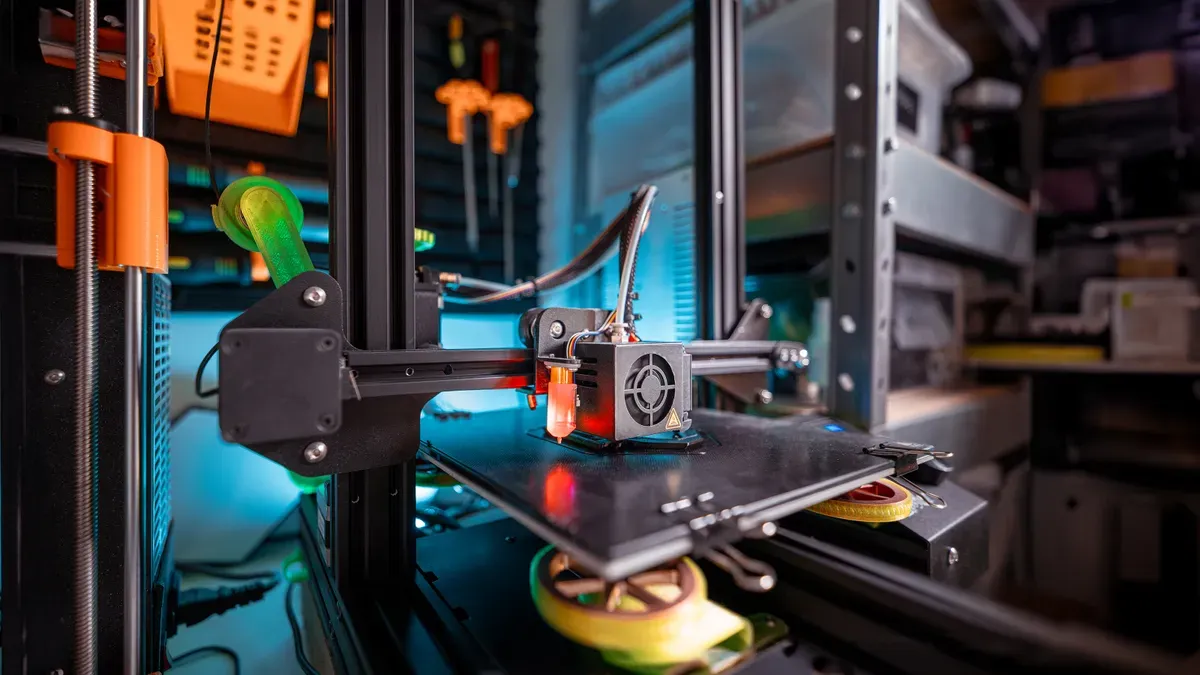
Rapid prototyping helps you turn digital ideas into real things fast. You can make a prototype quickly and see your design before making many. With rapid prototyping, you use digital manufacturing tools to build working parts. You can test your ideas and change them without waiting a long time. In manufacturing, this means you turn digital designs into real prototypes in just days. You get to look at, test, and improve your ideas before making the final product. You can use production-grade machines and production-intent material to make parts like the finished product. This way, you can try out different designs and pick the best one without spending a lot.
Tip: Rapid prototyping lets you make a minimum viable product. You can show your idea to others and get feedback early.
Rapid prototyping is important in product development. It helps you make prototypes faster and improve your product. Digital manufacturing tools let you make strong prototypes with production-intent material. You can test these parts for fit, strength, and how they work. This helps you find problems early and fix them before making many products. You save money and time by avoiding big mistakes. You also talk better with your team and others. Everyone can see the prototype and share ideas.
Here is how rapid prototyping helps product development:
Benefit | Description |
|---|---|
Faster Feedback Loops | You get feedback fast and find problems early. |
Financial Savings | Fixing problems early saves money and time. |
Improved Design Quality | You work on making a better product for users. |
Iterative Testing and Refinement | You keep testing and changing your prototype until it is ready. |
Enhanced Stakeholder Communication | You work better with your team and share clear goals. |
Rapid prototyping and digital manufacturing make building prototypes faster, cheaper, and more reliable. You can make working parts and test them with production-intent material. This helps you launch new products with more confidence.
Rapid prototyping methods help you make real products fast. Each method uses a different way to build things. You pick the best one for your project, materials, and time.
Method | Process Description | Application |
|---|---|---|
Paper Prototyping | Drawings show how a product or interface looks. | Good for early feedback on design ideas and layouts. |
Wireframing | Digital outlines show how a digital product is set up. | Helps you see the structure and layout of a product. |
Digital Prototyping | Software tools make virtual models you can use. | Lets you test and see a product that is close to the real thing. |
3D Printing | Builds a real object by adding layers of material. | Checks how a design looks and feels, good for real objects. |
You use 3d printing to build parts one layer at a time. This method is fast and makes complex shapes easy. You can pick from many types like Stereolithography (SLA), Selective Laser Sintering (SLS), Direct Metal Laser Sintering (DMLS), Fused Deposition Modeling (FDM), Multi Jet Fusion (MJF), PolyJet, and Hybrid PhotoSynthesis (HPS). 3d printing helps you test your design and change it quickly. You can make models to see and touch your product.
Note: 3d printing works well for tricky shapes and new ideas.
Cnc machining prototypes use computers to cut parts from solid blocks. You can make strong parts that are like the final product. Cnc machining works with metal, plastic, and composite materials. You can test your design and change it fast. Cnc machining gives you high accuracy and tight fits. You can make different versions quickly and for less money. This method lets you check fit, strength, and quality.
Cnc machining prototypes can be made as fast as 3d printing.
You get parts that are as strong as real production parts.
Cnc machining keeps changes easy and process steps simple.
Injection molding for prototyping uses molds to shape plastic parts. You can make prototypes fast and test them in real life. This method saves money for small and medium amounts. You can try different plastics and check your design. Injection molding lets you change your prototype and see if it works right.
Advantage/Disadvantage | Description |
|---|---|
Fast Production | You can make molds quickly and test designs early. |
Cost-Effective | It costs less for small batches because the tools are cheaper. |
Limited Durability | These molds last for only a few thousand uses, so they are not for big runs but good for quick tests. |
Sheet metal fabrication lets you make parts from aluminum, steel, or copper. You can test how strong your parts are in real situations. This method helps you find problems before making lots of products. You use real materials and see how your product works.
Sheet metal fabrication lets you test for strength and toughness.
You can spot problems before making many parts.
Urethane and vacuum casting help you make a small number of nice-looking parts. You can make 10 to 100 pieces in about 5 to 15 days. This method is good for parts that need to look smooth. You can test your product before making a lot of them.
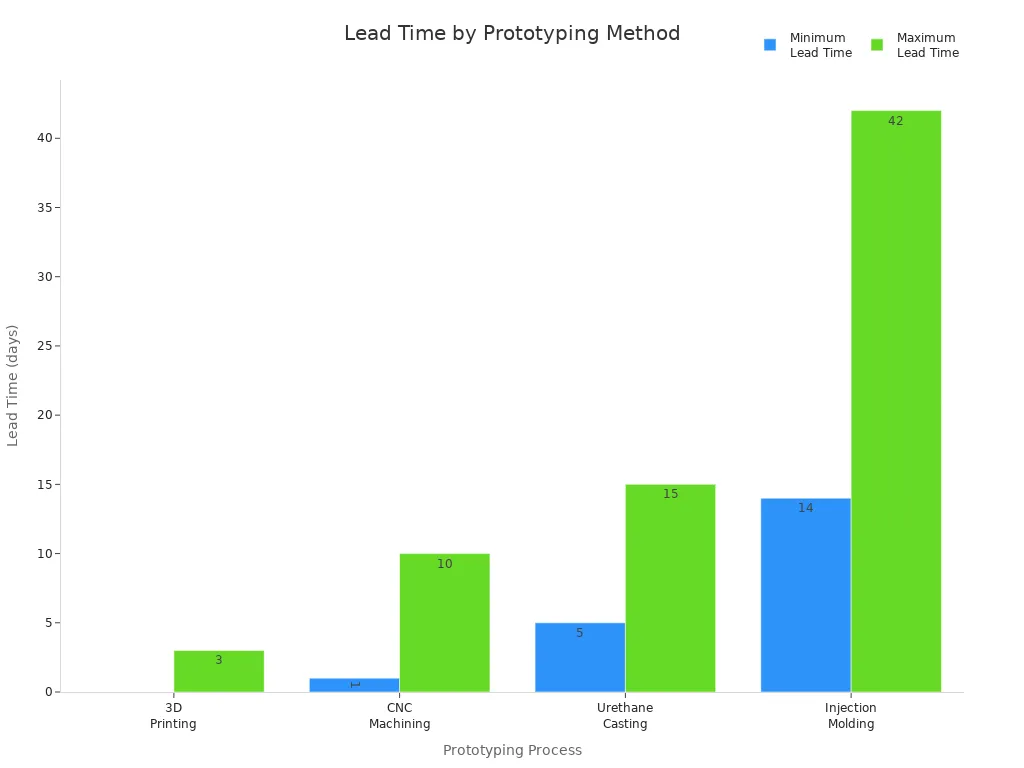
Tip: Pick your rapid prototyping method based on how fast, cheap, and what materials you need.
Rapid prototyping helps you make models fast. You can turn your ideas into real things quickly. You do not have to wait a long time for results. You can test and change your design in just a few days. Many companies use rapid prototyping to get faster feedback and better accuracy. For example, Black Diamond made full-size prototypes for less money. They lowered the cost from $420 to $70. They also got their prototypes in one day instead of a week. You can get feedback quickly and fix problems right away.
Rapid prototyping lets you build models fast and with good accuracy.
You can make prototypes quickly and test them soon.
You save time and money compared to old methods.
You get feedback early and find mistakes in your design.
Rapid prototyping helps you spend less money. Old prototyping methods cost more because tools are expensive and take longer. Rapid prototyping lets you make proof-of-concept models for less money. You can use cnc machining or 3D printing to make prototypes cheaper than using big machines. This lets you test your ideas without spending too much.
Rapid prototyping costs less than old manufacturing ways.
You avoid high costs from tools and slow steps.
Cnc machining and 3D printing are cheaper for making prototypes.
Rapid prototyping gives you more freedom in designing prototypes. You can try out complex shapes and make changes fast. Engineers use rapid prototyping to test special designs for different markets. You can change your product after testing and feedback.
Evidence | Description |
|---|---|
Complex Geometries | You can test tricky designs that used to cost too much. |
Quick Modifications | You can change your design fast after testing it. |
Unique Designs | You can make custom products for special needs. |
Rapid prototyping helps you lower risks when making products. Early testing lets you find problems before you start making lots of products. You do not need expensive tools, so you waste less material. Cnc machining and other methods help you spot issues early. In medical device development, early prototyping lowers the risk of recalls and delays. You stop costly mistakes by finding problems before making many products.
Rapid prototyping needs fewer tools and wastes less material.
You find problems early and save money.
Early prototyping stops mistakes in design and tools.
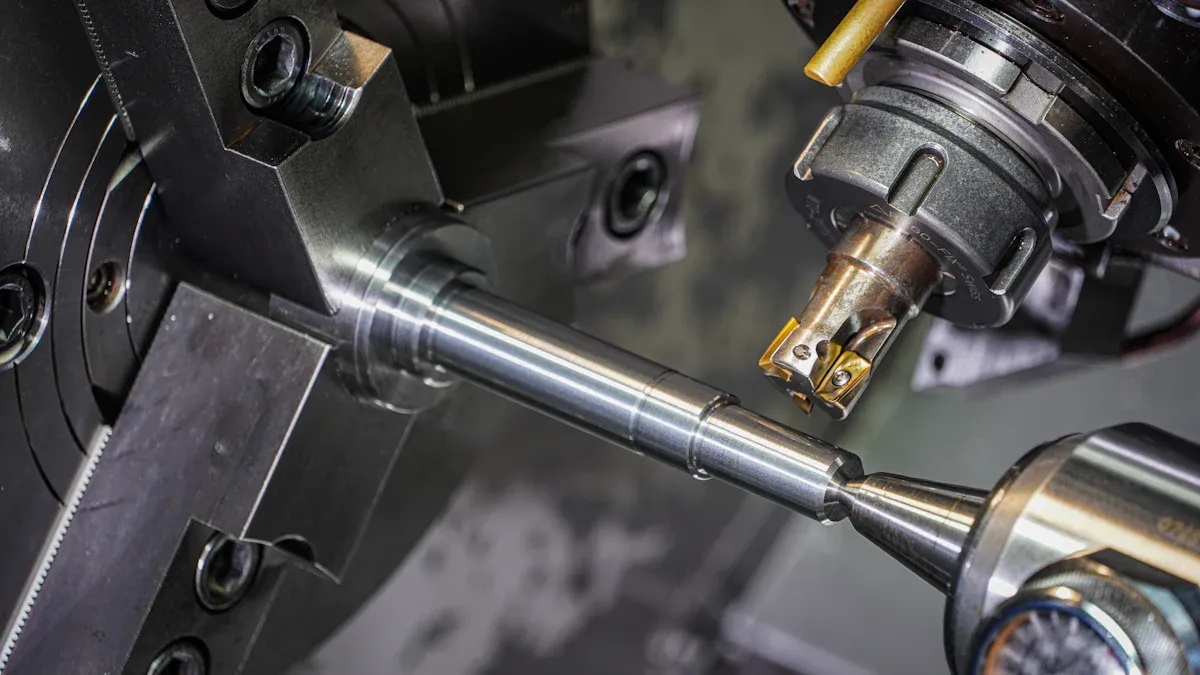
It is important to know how each rapid prototyping method works. The table below helps you compare the different methods. You can look at speed, accuracy, materials, best uses, and limits for each one.
Process | Speed | Accuracy | Material Options | Best Use Case | Limitations |
|---|---|---|---|---|---|
3D Printing | Very fast | Moderate | Limited | Early design validation | Weak mechanical properties |
CNC Machining | Moderate | High | Wide range | Functional prototypes | Higher cost per part |
Sheet Metal | Fast | High (flat) | Metals | Enclosures, brackets | Limited to formed geometry |
Urethane Casting | Moderate | Good | Plastic-like | Small batch prototypes | Mold lifespan limited |
Slower | Very high | Production plastics | Pre-production validation | Tooling cost |
Each method has good and bad points. 3D printing is quick and cheap, but parts are not very strong. CNC machining makes strong, exact parts, but costs more. Sheet metal is good for flat shapes and is fast, but cannot make tricky forms. Urethane casting is nice for small groups of parts with a smooth look, but molds wear out fast. Injection molding gives you the best quality and real plastics, but tools cost a lot for small jobs.
Tip: Before you choose, think about what matters most to you—speed, strength, or price.
You can pick from many materials in these methods. 3D printing uses resins, nylon, and photopolymers. CNC machining lets you use plastics and metals like aluminum, steel, and titanium. Sheet metal uses metals such as aluminum and copper. Urethane casting uses plastic-like materials. Injection molding uses real production plastics for strong and exact parts.
You should pick the method that fits your project best. Use 3D printing when you need to check designs fast. Pick CNC machining for strong, working models. Choose sheet metal for covers and brackets. Try urethane casting for small batches that need to look nice. Use injection molding to test your design before making lots of products.
Additive methods like 3D printing build parts layer by layer. Subtractive methods like CNC machining cut away material. Additive methods are good for tricky shapes and quick changes. Subtractive methods are better for strong, exact parts. This comparison helps you save money and pick the best way to make your prototype.
You start by making your design in CAD software. Then, you turn your design into an STL file. This file tells the printer what to do. Next, slicing software breaks your model into thin layers. The 3d printer reads these layers and builds your part one layer at a time. After printing, you clean the part and make it smooth. You might sand it or add surface treatments. At the end, you test your prototype to see if it works.
Steps in 3d printing for rapid prototyping:
Think of your idea and design it in CAD.
Change your design into an STL file.
Slice the STL file into layers.
Print the model layer by layer.
Make the part smooth after printing.
Test your prototype to see how it works.
Tip: 3d printing lets you touch your design before making lots of parts.
3d printing is fast and flexible. You can make shapes that are hard to build with other methods. You can change your design quickly and print again. This method is good for early testing and models you can see. But, the parts may not be as strong as other methods. You might see lines or need extra work to make them smooth.
Pros:
Fast prototypes.
Good for tricky or custom shapes.
Easy to change designs and print again.
Cheap for small batches.
Cons:
Parts may not be very strong.
Surface may need more work.
Fewer material choices than other methods.
You can use many materials in 3d printing. Some common ones are:
PLA: Easy to use and good for the environment.
ABS: Works well with high heat.
Resin-based materials: Good for smooth, detailed parts.
Titanium and aluminum alloys: Used for strong, light parts in aerospace.
TPU: Flexible, good for phone cases and soft parts.
Pick the material that fits your prototype best.
3d printing helps in many areas. You can test ideas, check fit, or show your design. The table below shows common uses:
Application Area | Use Case Description | Example |
|---|---|---|
Consumer Electronics | Check how a product looks and feels | Companies test comfort of new devices |
Medical and Dental | Make models for medical and dental uses | Surgeons use 3D printed models for planning |
Architecture | Build detailed models of buildings | Architects make small building models |
Engineering | Check design and how it works | Engineers test fit and function of assemblies |
Education | Give hands-on learning tools | Schools use models to teach science |
Art and Jewelry | Make special designs and custom pieces | Jewelry designers make custom rings and necklaces |
Robotics | Make parts for robots | Companies print gears and housings for robots |
Manufacturing | Make special tools and fixtures | Factories make custom jigs for assembly lines |
Fashion and Textiles | Design and make unique fashion items | Designers create special clothes and accessories |
You use cnc machines to cut parts from solid blocks. First, you design your part in CAD software. Then, you make instructions for the cnc machine. The machine follows these steps to remove material and shape your part. You can make strong and exact prototypes this way. You can use production-grade materials, so your prototype acts like the real product.
The cnc process helps you test fit, strength, and function. You can change your design and quickly make a new part. This method is good for testing and parts that need to be strong.
Cnc machining gives you accurate and strong parts. You can use metals and plastics. Your prototypes match your final product. You can test how your part works in real life. But, you must design your part carefully. If you skip checks, you may have problems. Too tight tolerances can make costs go up.
Advantages | Disadvantages |
|---|---|
Makes parts with tight tolerances | Problems happen if you skip design checks |
Uses production-grade materials | Too tight tolerances can cost more |
Fast turnaround, often in days | Needs careful design to avoid mistakes |
Good for testing strong parts | |
Checks if parts can be made for production |
You can use many materials in cnc machining. Some common choices are:
Aluminum
Steel
Stainless Steel
Magnesium
Titanium
Zinc
Brass
Bronze
Copper
ABS
PC
PP
PS
POM
PMMA
Teflon
LDPE
HDP
Vinyl
Fiberglass
Carbon fiber
Laminates
Fibreboard
Corrugated plastic
You can also use special materials like Delrin or PEEK. This makes cnc a good choice for many prototypes.
You use cnc for many prototypes. You can make parts for cars, planes, medical devices, and electronics. Cnc is good for testing, strong parts, and checking if your design works. You can also make custom tools and covers. Engineers use cnc to see if their design works in real life.
You use injection molding to make plastic parts. You start by designing your part and making a mold. The machine heats the plastic and pushes it into the mold. The plastic cools and takes the shape of your design. You can make many parts fast with this method. You can test your design with real plastics.
Injection molding helps you check your design before making lots of parts. You can try different materials and see how your part works.
Injection molding gives you detailed, high-quality parts. You can use real plastics for your prototypes. You can make many parts quickly after the mold is ready. This method is good for testing and small batches. The main challenge is the cost and time to make the mold. But, you save money if you need many parts.
Pros:
Detailed, high-quality parts.
Uses real plastics.
Fast production after mold is ready.
Good for small and medium batches.
Cons:
Mold making takes time and costs more.
Not good for very small amounts.
You can use many plastics in injection molding. Some common ones are:
ABS
PC
PP
PS
Nylon
PE
POM
PMMA
TPE/TPU
Pick the material that matches your final product.
You use injection molding for many prototypes. You can make parts for products, medical devices, cars, and electronics. This method is good for testing fit, function, and looks. You can also make small batches for market testing.
You use sheet metal fabrication to make parts from flat metal. You cut, bend, and shape the metal into your design. You use tools like lasers, punches, and presses. This method is good for making covers, brackets, and enclosures. You can test your design with real metals.
Sheet metal fabrication helps you find problems before making lots of parts. You can change your design and quickly make new versions.
Sheet metal fabrication gives you strong parts with real metals. You can make flat and bent shapes easily. You get fast production and can test your design. But, this method works best for simple shapes. Complex forms are harder to make.
Pros:
Strong, real metal parts.
Fast for simple shapes.
Good for covers and brackets.
Cons:
Only flat and bent shapes.
Not good for tricky 3D forms.
You can use many metals in sheet metal fabrication. Common choices are:
Aluminum
Steel
Stainless steel
Copper
Brass
Pick the metal that fits your prototype best.
You use sheet metal fabrication for many products. You can make covers for electronics, brackets for machines, and covers for devices. This method is good for testing strength and fit. Many industries use sheet metal for quick, strong prototypes.
You use urethane and vacuum casting to make small batches of parts. First, you make a master model with 3d printing or cnc. Then, you make a silicone mold around the master. You pour liquid urethane into the mold and use a vacuum to remove air bubbles. The urethane hardens and takes the shape of your design. You can make 10 to 100 parts quickly.
Urethane and vacuum casting help you test your design before making lots of parts. You get smooth, detailed prototypes.
Urethane and vacuum casting give you smooth, high-quality parts. You can make small batches fast. You can test your design with plastic-like materials. But, the molds wear out after many uses. This method is best for short runs.
Pros:
Smooth, detailed parts.
Fast for small batches.
Good for testing looks and fit.
Cons:
Mold wears out after many uses.
Not for big production runs.
You can use many types of urethane in this process. You can pick materials that act like ABS, rubber, or clear plastics. This lets you test different properties in your prototype.
You use urethane and vacuum casting for many prototypes. You can make covers, housings, and display models. This method is good for market testing, user feedback, and short runs. Many designers use it to show their ideas before full production.
You need to start by understanding what you want from your prototype. The prototyping process begins with clear goals. Ask yourself why you need the prototype. Do you want to test the shape, the strength, or how it works? You should also think about how many prototypes you need and how fast you need them.
Here are some things to consider when you pick a prototyping process:
Define your objectives and requirements.
Decide if you need to test looks, function, or both.
Think about the number of parts you need.
Set your timeline for getting the prototype.
Check if you need special features or details.
Knowing your goals helps you choose the right prototyping process for your project.
Cost and lead time play a big role in the prototyping process. You want to finish your prototype quickly and stay within your budget. Many things can change the cost and speed of your project.
Look at these factors when you plan your prototyping process:
Design complexity can make the process longer and more expensive.
The type of material you pick affects both price and time.
Testing needs can add to the cost and lead time.
If you need extra services, your project may take longer and cost more.
Giving clear and correct information helps avoid delays.
You can save time and money by planning your prototyping process carefully.
You must match the material and the use of your prototype. The prototyping process works best when you pick materials that act like the final product. If you need a strong part, choose a material that is tough. If you want to test how it looks, pick a material that shows details well.
Think about these points for your prototyping process:
Make sure the material fits your testing needs.
Check if the process can handle the shape and size you want.
Pick a method that matches your project’s final use.
If you want to know how to choose a rapid prototyping method, look at your goals, budget, and material needs. The right prototyping process helps you test your ideas and get better results.
Tip: Always match your validation goals and material selection to your prototyping process for the best outcome.
You can begin rapid prototyping by following a few clear steps. First, sketch your design on paper. This helps you see your idea and spot any problems early. Next, build a simple mockup using easy materials like cardboard or foam. This lets you check the size and shape before you spend more time or money.
Once you feel good about your mockup, create a digital model using CAD software. Define the most important sizes and shapes for your part. Upload your CAD file to get feedback on how easy it will be to manufacture. This step helps you fix problems before making the real prototype.
Here is a simple list to guide you:
Sketch your idea to clarify your design.
Build a basic mockup with simple materials.
Make a CAD model and define key dimensions.
Get early feedback by sharing your CAD file.
Choose a prototyping method that fits your needs.
Many people make the same mistakes when starting rapid prototyping. You can avoid these problems by planning ahead.
Tip: Keep your design simple. Complex shapes and tight tolerances can slow you down and cost more.
Here are some common mistakes:
Picking a process without thinking about speed, strength, or accuracy.
Using rare materials that take a long time to get.
Adding extra features or finishes that are not needed for testing.
Skipping early feedback from others.
Not checking if the design can be made easily.
You can save money and time by following smart steps. Choose materials that are easy to find. Avoid making your design too complex. Only add special finishes if you need them for testing.
Here are some tips:
Simplify your design to make manufacturing faster.
Use standard materials to keep lead times short.
Skip extra steps like painting or polishing unless you need them.
Get feedback early to catch problems before production.
Use a decision tree to pick the best prototyping method for your project.
By following these steps, you can make your prototyping process smooth and efficient. You will get better results and reach your goals faster.
HoudeMold gives you a new way to use rapid prototyping. You can make both prototypes and real parts with good accuracy. HoudeMold helps you turn ideas into real products fast and without trouble.
You can order just a few parts or even one sample from HoudeMold. This helps you test your designs without spending too much money. You do not have to buy a lot at once. You can try out new ideas and get feedback quickly. HoudeMold helps people with creative projects and special markets. You can start selling new products with less risk and not keep too many extras.
Tip: Making small batches lets you check your design before making a lot.
HoudeMold uses almost 100 high-end JSW machines. You get parts that fit well and look smooth. The company checks every part with special inspection systems. You can trust your prototypes will be just what you need. HoudeMold uses things like 3D laser engraving and automatic coating lines. Your products will look nice and work the right way.
Feature | Benefit |
|---|---|
High-end equipment | Accurate and reliable parts |
Quality inspection | Consistent results |
Advanced technologies | Better surface and function |
You can make more parts with HoudeMold if you need to. If your product gets popular, HoudeMold can make big orders too. You do not have to find a new company. They help you from the first idea to making lots of products. You get help for the whole project and clear updates. HoudeMold makes rapid prototyping easy and fast for any step of your work.
Note: You can focus on your design while HoudeMold takes care of making the parts.
You can speed up your product development with rapid prototyping. Here are the main benefits:
You get your product to market faster.
You lower your development costs.
You test and improve designs more easily.
You try different materials for better results.
You increase your return on investment.
For your next project, choose the process that fits your needs. If you want expert help, consider reaching out to a service like HoudeMold.
You can use 3D printing for the fastest results. This method builds parts layer by layer. You get your prototype in just a few hours. It works well for early design checks.
Start with your project goals. Think about speed, cost, and material needs. Make a list of what matters most. You can use a table to compare methods:
Method | Speed | Cost | Materials |
|---|---|---|---|
3D Printing | High | Low | Plastics |
CNC Machining | Med | Med | Metals |
Injection Mold | Low | High | Plastics |
Yes, you can. Use CNC machining or injection molding for strong parts. These methods use real metals or plastics. Your prototypes will act like the final product.
You can pick from many materials. Some common choices are:
Plastics (ABS, PLA, Nylon)
Metals (Aluminum, Steel)
Urethane for casting
Pick the material that matches your testing needs.
Rapid prototyping helps you test ideas fast. You find problems early. You save money and time. You can show your design to others and get feedback before making many products.