
Views: 0 Author: Site Editor Publish Time: 2026-02-27 Origin: Site

Die casting helps you make metal parts with great accuracy. It works by pushing hot, melted metal into a die with strong pressure. This process gives you parts that fit very well and are very precise. HoudeMold can make many parts fast and can handle complex shapes easily. The die casting market was worth $65.68 billion in 2023. It will grow to $103.65 billion by 2032.
Metric | Value |
|---|---|
Annual processing capacity | More than 5 million pieces |
Yield rate | 22% higher than older methods |
Film thickness deviation | Less than or equal to 3 μm |
Adhesion standard | Meets ASTM D3359 5B standard |
Die casting makes metal parts fast and precise. This is good for making lots of parts.
The process lets you create tricky shapes and thin walls. Parts fit well and need less extra work.
Picking the best alloy is very important. Aluminum and zinc are strong and light, so people use them a lot.
Automation in die casting helps things go faster. It lowers mistakes and keeps quality the same every time.
Many industries use die casting, like cars and electronics. It gives dependable parts for many uses.
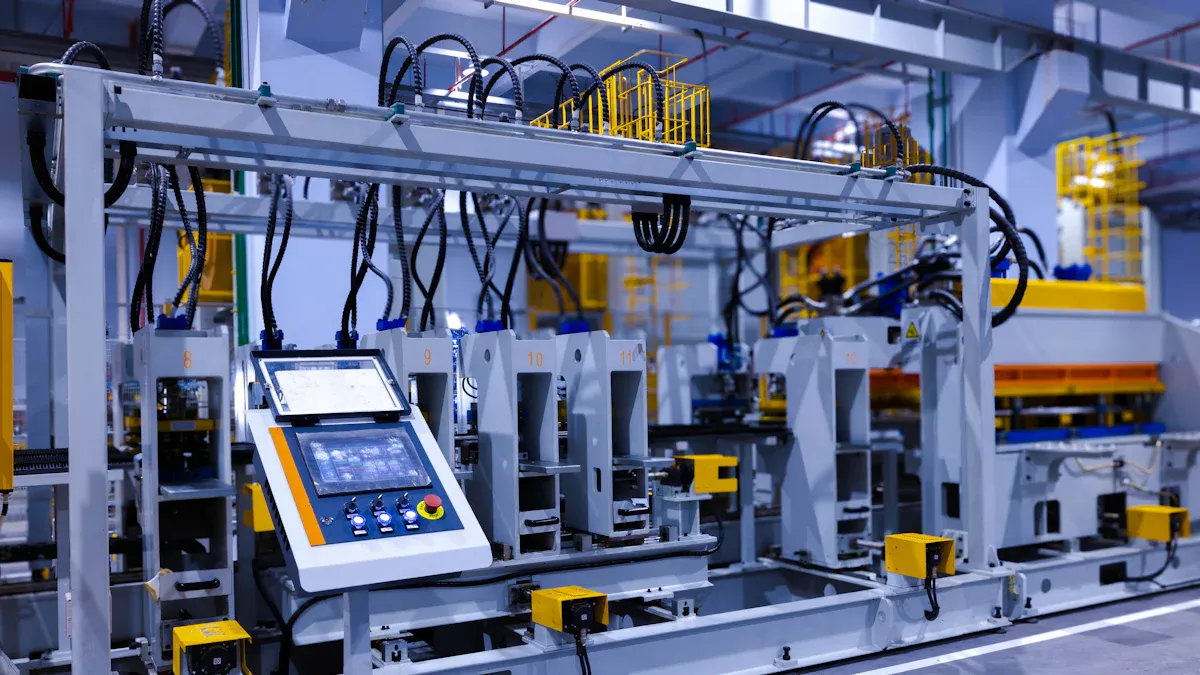
Die casting is a way to shape metal parts fast and accurately. You use special molds called dies to form the metal. Hot, melted metal goes into these dies with strong pressure. The metal cools down and gets hard very quickly. This makes a finished part that matches your design. Experts say die casting means pouring or injecting melted metal into dies. The metal then hardens to make the part you want. You can use die casting when you need parts that fit well and look smooth.
HoudeMold uses new die casting technology for tight tolerances and less waste. You can make shapes and thin walls that other methods cannot do. Die casting works best with metals like aluminum, zinc, and magnesium. The parts are strong, light, and ready for many uses.
Die casting has features that make it different from other ways to form metal. The process uses high pressure to push melted metal into the dies. This helps you make parts with detailed designs and thin walls. You can make hundreds or thousands of parts every hour. This makes die casting great for making lots of parts.
Tip: Die casting is best if you need parts with tricky shapes and smooth surfaces.
Here is a table that shows how die casting is different from other ways to form metal:
Characteristic | Die Casting | Other Processes |
|---|---|---|
Method of Production | Injects molten metal into a mold | Uses flat metal sheets for forming |
Part Complexity | Capable of creating complex shapes | Best for simpler geometries |
Production Volume | Ideal for high-volume production | Suitable for smaller production runs |
Wall Thickness | Can produce thinner walls (1-2mm) | Typically thicker walls |
Material Options | Limited to non-ferrous metals (e.g., aluminum, zinc) | Various materials available |
Surface Finish | Smooth finish, ideal for high-quality appearance | Varies based on process |
Die casting lets you make parts with thin walls and tricky shapes. You also get a smooth surface, so you do not need much extra work after.
Here are some main features of die casting that help you get accurate and fast results:
You get parts that fit together very well.
You can make thin-walled parts with hard shapes.
The process gives you smooth surfaces, so you need less extra work.
High-pressure die casting uses machines and short times, often under a minute per part. You can make many parts quickly.
High pressure in die casting changes the quality and shape of your parts in many ways:
Aspect | Impact |
|---|---|
High Production Rates | Lets you fill molds fast and cool parts quickly for mass production. |
Dimensional Accuracy | Gives you parts with the same size and shape, so you need less extra work. |
Complex Shapes and Thin Walls | Lets you make tricky designs and thin parts, making products work better. |
Smooth Surface Finish | Makes parts with smooth surfaces, so you do not need much extra work. |
Material Efficiency | Cuts down on wasted metal by making parts close to the final shape. |
You can count on HoudeMold’s die casting to give you parts that are accurate, fast, and complex. You get good results every time, whether you need parts for cars, electronics, or home appliances.
You can make die casting parts quickly and accurately by following a clear process. The die casting process uses a die casting mold and high pressure to shape metal into the form you need. Here is how the casting process works from start to finish:
Mold Preparation: You start by cleaning and lubricating the die casting mold. This step helps the parts release easily and keeps the mold in good shape.
Injection: Next, you inject molten metal into the die casting mold using high pressure. This step fills every detail of the mold, even thin walls and complex shapes.
Cooling and Solidification: The metal cools and hardens inside the mold. This step is fast, so you get strong die casting parts with the right shape.
Ejection: Once the metal is solid, you open the die casting mold and remove the finished part. Automated systems can help with this step to keep the process moving quickly.
Trimming and Finishing: You trim away any extra material from the casting process. Sometimes, you may also polish or finish the parts to meet your needs.
Tip: The die casting process can make hundreds or thousands of die casting parts every hour. You get high-quality parts with very little waste.
The die casting process stands out because it uses high pressure and fast cooling. This lets you make die casting parts with thin walls, smooth surfaces, and complex designs. You can count on each part to match your design closely.
Modern die casting uses advanced equipment to make the casting process faster and more reliable. You need the right machines to melt, inject, cool, and finish your die casting parts. Here are some key types of equipment you will find in a die casting production line:
Equipment Type | Function |
|---|---|
Central Melt Furnace | Melts metal to the right temperature for the die casting process. |
Shot Monitoring Systems | Checks each shot to make sure it meets the process standards. |
Extraction Robots | Removes die casting parts from the die casting mold automatically. |
Auto-Trim Presses | Trims parts to the correct shape and size without manual work. |
Dip-Quenching Systems | Cools parts quickly to improve their strength and quality. |
You also find centralized melting furnaces, multiple trim presses, and systems to recover scrap metal. These tools help you keep the casting process efficient and clean.
Automation plays a big role in modern die casting. When you use automated machines, you get several benefits:
You reduce cycle times, so you make more die casting parts in less time.
You keep the process the same for every part, which means better quality and fewer mistakes.
You use AI-driven quality control to spot flaws right away, so you only keep the best parts.
Note: HoudeMold uses full automation and advanced sensors to make sure every die casting part meets strict standards. You get fast delivery, high accuracy, and strong, lightweight parts every time.
The die casting process at HoudeMold can make parts as thin as 0.5mm for aluminum and 0.3mm for zinc. You can produce hundreds or even thousands of die casting parts per hour. This makes the casting process perfect for high-volume production and complex designs.
If you need die casting parts with tight tolerances, smooth surfaces, and strong material properties, you can trust the die casting process and equipment at HoudeMold. You get reliable results for every production run.
Hot-chamber die casting is good for making small parts fast. It works best with metals like zinc and magnesium. These metals melt at lower temperatures. The machine keeps melted metal ready all the time. You do not need to wait for each batch. The metal goes right into the die under high pressure. This makes parts quickly.
Hot-chamber die casting gives you smooth parts with tight sizes. You can make thin parts and tricky shapes. Many companies use this process to make lots of parts. You save time and get more parts every hour.
Here is a table that shows the good and bad sides of hot-chamber die casting for certain alloys:
Advantages | Disadvantages |
|---|---|
High accuracy for size and surface, good for thin and complex castings. | Can have pores and cannot be heat treated because the fluid is not stable. |
Makes thousands of parts quickly. | Hard to make deep or tricky shapes. |
Saves money by needing less extra work and using metal well. | Only works with some alloys, and high melting points can wear out the mold. |
Easy to treat the surface. | Not good for small batches because molds cost a lot. |
Tip: Hot-chamber die casting is best for making many parts fast, especially when you need low-pressure die casting for small, detailed parts.
Cold-chamber die casting is used for metals that melt at higher temperatures, like aluminum. You melt the metal outside the machine. Then you pour it into the chamber for each cycle. Cold-chamber die casting is slower than hot-chamber. But it lets you make bigger and more complex parts.
Cold-chamber die casting is good for strong parts and things that need extra strength. You can use high pressure to make parts with strong materials and smooth surfaces. Many car and appliance companies use this method for big parts.
Here is a table that compares hot-chamber and cold-chamber die casting:
Feature | Hot Chamber Die Casting | Cold Chamber Die Casting |
|---|---|---|
Material Compatibility | Works with metals that melt at lower temperatures | Handles metals that melt at higher temperatures |
Speed and Efficiency | Faster because melted metal is always ready | Slower but can make more kinds of parts |
Applications and Size | Best for small, high-volume parts | Great for big, strong, and complex parts |
Hot chamber machines have melted metal inside. Cold chamber machines need melted metal from outside.
Hot chamber die casting is faster because metal is always ready. Cold chamber is slower because you must pour the metal each time.
Hot chamber is good for small, precise parts. Cold chamber is used for big, strong parts.
Note: You can use low-pressure die casting with both methods. Cold-chamber is better for big parts and tough metals.
You can pick the right die casting method based on the size, material, and how many parts you need. Both hot-chamber and cold-chamber die casting help you make parts that are high quality and accurate.
You can pick from many alloys for die casting parts. Each alloy has special traits that help you get the results you want. The most used alloys are aluminum, zinc, magnesium, copper, and some special metals. You can see how these alloys are different in the table below:
Alloy Type | Properties | Typical Applications |
|---|---|---|
Aluminum Alloys | Lightweight, strong, excellent corrosion resistance | Automotive parts, aerospace components, electronic housings |
Zinc Alloys | Superior dimensional accuracy, high ductility | Electronics, automotive parts, hardware fittings |
Magnesium Alloys | Lightest structural metals, excellent strength-to-weight ratio | Automotive, aerospace, electronics |
Copper Alloys | Exceptional thermal and electrical conductivity | Electrical connectors, plumbing fixtures, industrial machinery |
Specialized Alloys | Engineered for unique applications | Titanium alloys for aerospace, nickel-based alloys for extreme heat resistance |
Aluminum die casting is popular because it makes parts light and strong. Zinc alloys help you make parts with smooth surfaces and high accuracy. Magnesium alloys are the lightest, so they are good for strong but light parts. Copper alloys work well for parts that need to carry heat or electricity.
Tip: Pick your alloy based on what you want your die casting parts to do.
You need to think about a few things before picking a material for your die casting project. These things help you match the right alloy to your design and needs. Here is a table that shows what you should look at:
Factor | Description |
|---|---|
Design Complexity | The intricacy of the part's design that may affect material choice. |
Mechanical Properties | Characteristics like strength and hardness that determine performance. |
Thermal Conductivity | The ability of the material to conduct heat, important for thermal management. |
Corrosion Resistance | The material's ability to withstand environmental degradation. |
Cost | Economic considerations including material price and availability. |
Regulatory Requirements | Compliance with industry standards and regulations. |
You should check the strength, weight, and cost of each alloy. Aluminum alloys are strong and light, which is good for big parts. Zinc alloys let you make parts with fine details and high precision. Magnesium alloys are best when you want parts to be light. Copper alloys are great for parts that need to move heat or electricity.
Cost is important too. Aluminum alloys are often the cheapest for die casting. Corrosion resistance matters, especially for aluminum and magnesium. You can make this better with special surface treatments.
Note: Picking the right material helps your die casting parts last longer and work better.
You can get many benefits when you choose die casting for making metal parts. This process stands out because it lets you produce parts quickly and with high accuracy. You inject molten metal into a mold under strong pressure. This gives you parts with tight tolerances and smooth surfaces. You do not need much extra work after the casting. Die casting also helps you make complex shapes and thin walls that other methods cannot achieve.
Here is a table that shows the main advantages of die casting:
Advantage | Description |
|---|---|
High efficiency | You can make many parts fast, which is great for high-volume production. |
Excellent dimensional accuracy | You get parts that fit well and look smooth, so you save time on finishing. |
Material strength | Die casting parts are strong and durable, ready for tough jobs. |
Cost-effectiveness for large runs | The more parts you make, the lower the cost per part. |
Tip: Die casting is perfect if you need lots of parts with tricky shapes and want to keep costs low for big projects.
You can use die casting to create parts for cars, electronics, and appliances. The process works well for small to medium-sized castings. You get reliable results every time.
Die casting has some challenges you should know about before starting your project. You need to pay for expensive molds at the beginning. This can make it hard for small runs. Die casting works best with non-ferrous metals like aluminum and zinc. You cannot use materials like steel or titanium because they damage the molds.
Porosity can affect up to 30% of die casting parts. This means tiny holes may form inside the parts, which can lower strength and cause problems in pressure-tight jobs. You may need to track scrap rates and fix defects to keep costs down. Some parts may show surface marks or need special design rules, like keeping wall thickness uniform.
Here are the main limitations:
High initial tooling costs for molds.
Material choices are limited to certain metals.
Porosity can cause defects and extra costs.
Design rules can make complex parts harder to create.
Surface defects may affect the look and quality of parts.
Note: You can prevent many problems by planning your die casting project carefully and checking parts for defects early.
Die casting is used to make many kinds of parts. Different industries use die casting for lots of reasons. It helps you make many parts fast. You can create shapes that are tricky and designs that are light. Here are some ways die casting is used.
Die casting is found in almost every car. It helps make parts that are not heavy. Lighter cars use less gas. The parts are strong and last a long time. Die casting lets you make thin walls and detailed shapes. These parts help engines and transmissions work better.
Cars are lighter, so they use less fuel.
Engine parts last longer and work well.
Strong parts help your car last more years.
Aspect | Description |
|---|---|
Thin-Wall Capability | Parts can have walls as thin as 1–2 mm. This saves weight and material. |
High Dimensional Accuracy | Parts fit together perfectly because they are very precise. |
Strength | Metal flows well, so parts are tough and dense. |
Alloy Compatibility | Aluminum and magnesium alloys keep cars strong and light. |
Fast Production | You can make many parts quickly with short cycles. |
Die casting makes strong parts for electronics and appliances. You can make laptop cases, TV frames, and phone holders. The process lets you design shapes with lots of details. Parts handle heat well and last a long time.
Material | Key Benefits | Typical Use Cases |
|---|---|---|
A380 Aluminum | Light and conducts heat | Laptop cases, appliance frames |
ADC12 Aluminum | Smooth finish, easy to shape | TV bezels, audio casings |
Zamak 3 | Accurate and detailed | Knobs, phone holders, cameras |
ZA-8 | Strong and resists corrosion | Appliance latches, supports |
Brass 360 | Conducts electricity | Switches, connectors |
Die casting helps you make parts that are tough and can handle stress. You can try new designs because the process is flexible.
Die casting is used in many other areas. Aerospace companies use it for engine housings and brackets. Medical device makers use die casting for tools and equipment cases. Robotics and machines need strong and precise parts. Power tools and products also use die casting for bodies and frames.
Industry | Applications of Die Casting |
|---|---|
Aerospace & Aviation | Engine housings, turbine blades, brackets |
Medical & Health Care | Surgical tools, device housings, dental instruments |
Robotics & Automation | Robotic arms, gearboxes, sensor housings |
Consumer Products | Power tool bodies, furniture hardware, smartphone frames |
Industrial Machinery | Pumps, valve bodies, motor housings |
Die casting lets you make lots of parts with high precision. Many industries use it to make products that are complex, light, and strong. You can make these products quickly.
Die casting lets you make parts quickly. You use less metal and waste. You can create shapes that are hard to make. The parts fit together very well. Advanced machines help make strong and precise parts. Automation makes the process faster and easier. You can pick hot-chamber or cold-chamber methods. There are many alloys to choose from. HoudeMold gives you fast work and good quality. You get reliable parts for big jobs.
You can use aluminum, zinc, magnesium, and copper alloys. Each metal has special strengths. Aluminum is light and strong. Zinc gives you smooth surfaces. Magnesium is the lightest. Copper works well for electrical parts.
Die cast parts have tight tolerances. You get parts that fit together well. Most parts need little or no extra work. HoudeMold can achieve film thickness deviations as low as 3 μm.
Yes! Die casting works best for high-volume production. You can make hundreds or thousands of parts every hour. This saves you time and money.
You can create very complex shapes. Die casting lets you design thin walls, small details, and tricky forms. This process is perfect for parts that need special designs.
Automotive, electronics, appliances, and power tools use die casting often. You also see die cast parts in aerospace, medical devices, and robotics.